

Victory in this year’s Dakar Rally brought global attention to both ‘Dacia’ and the ‘Sandrider’ name. But what is the Sandrider and how did it become a winner in the world’s most gruelling off-road rally?
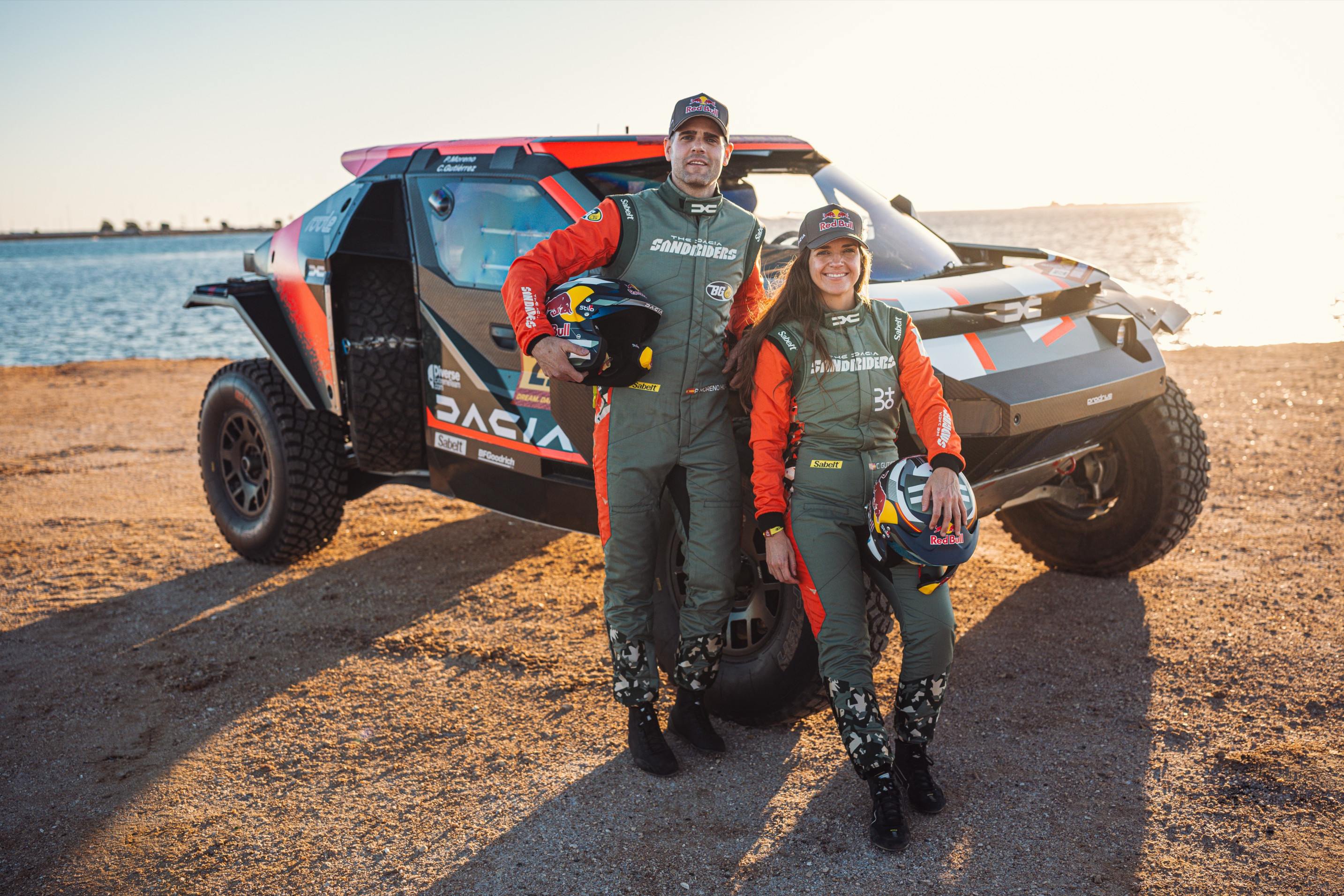
Dacia was founded in Romania in 1966, initially building Renaults under licence. Since acquisition by Renault in 1999 and relaunching as a budget-oriented “youth brand,” Dacia has gradually established its own identity - and grown its market, too. Over the past decade, Dacia sales, mostly to European markets, have reached more than 500,000 units annually.
Manifesto First
Although it was unveiled as a concept in 2024, then made its competition debut in that year’s Rallye du Maroc, the Moroccan leg of the World Rally-Raid Championship (W2RC), the Sandrider story actually started a couple of years earlier.
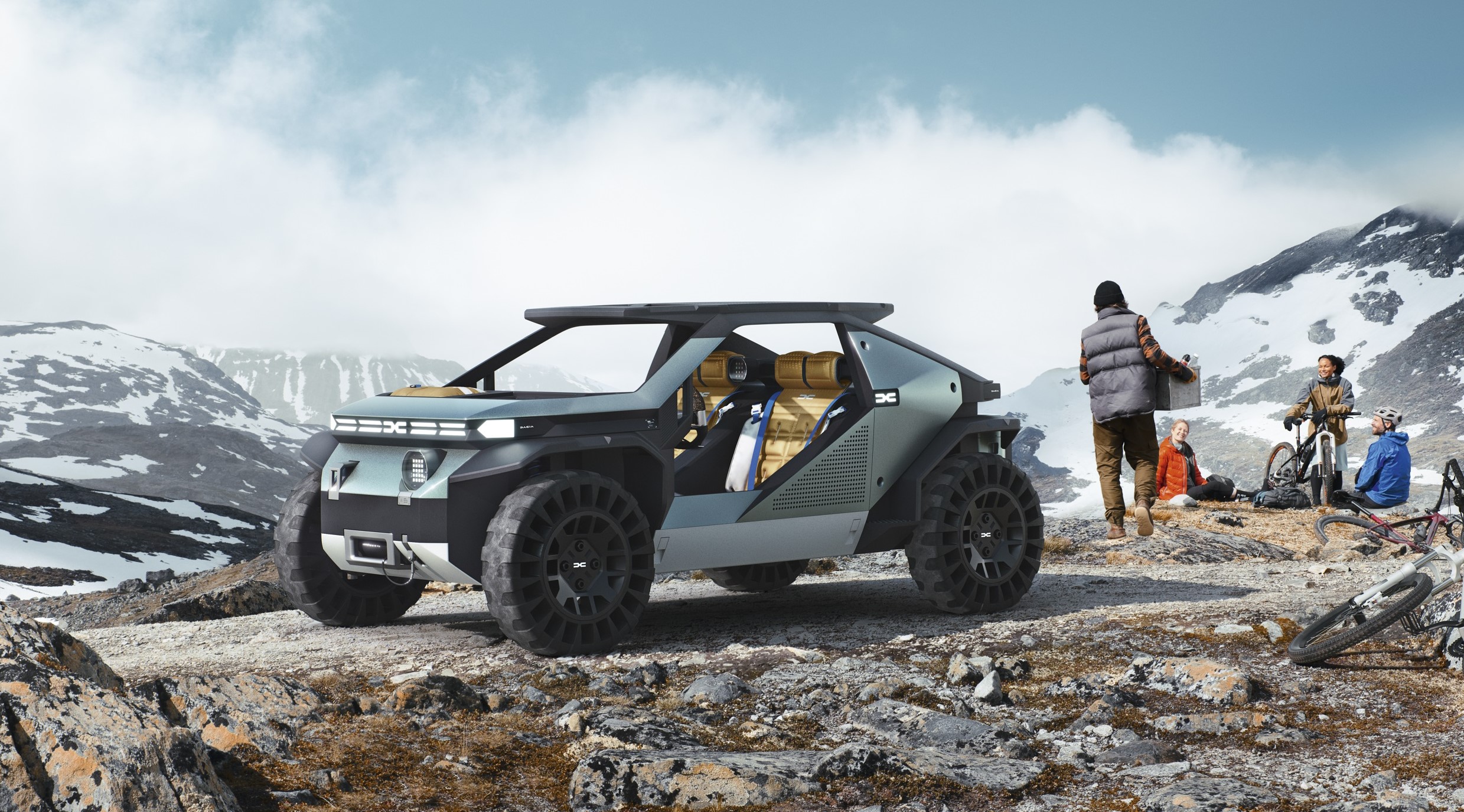
Back in 2022, Dacia presented the ‘Manifesto’ concept. As featured with JUST 4X4s, the Manifesto looked like a pumped-up Side-by-Side or off-road buggy. With no doors, windscreen or rear glass, the Manifesto exposed its occupants to the elements. For that reason, the interior was completely waterproof.
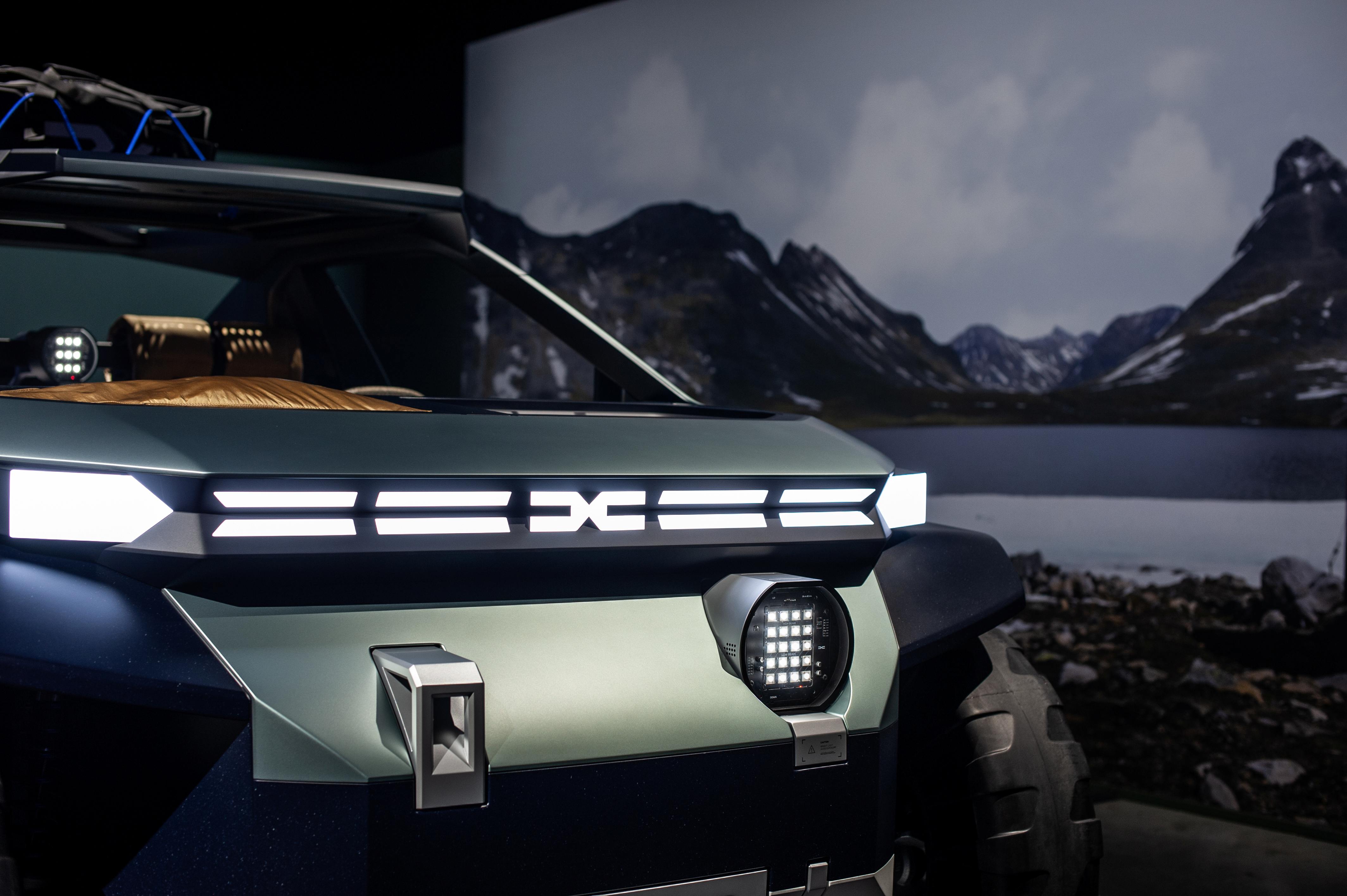
Pitched by Dacia as a “laboratory of ideas,” some of the Manifesto’s clever features included a single headlight that could be detached to use as a torch, a flat rear deck that could double as a workbench, seat covers that doubled as sleeping bags, and a modular dash system that allowed items like cameras and GPS units to be clipped on as needed.
A focus on renewability included body panels made using recycled plastics, puncture-proof ‘hollow’ tyres, and the use of cork on the dash.
While the Manifesto was said to be electrically powered and with four-wheel drive, no details were provided at the time, although Dacia did say the platform was flexible enough to take petrol and diesel engines.
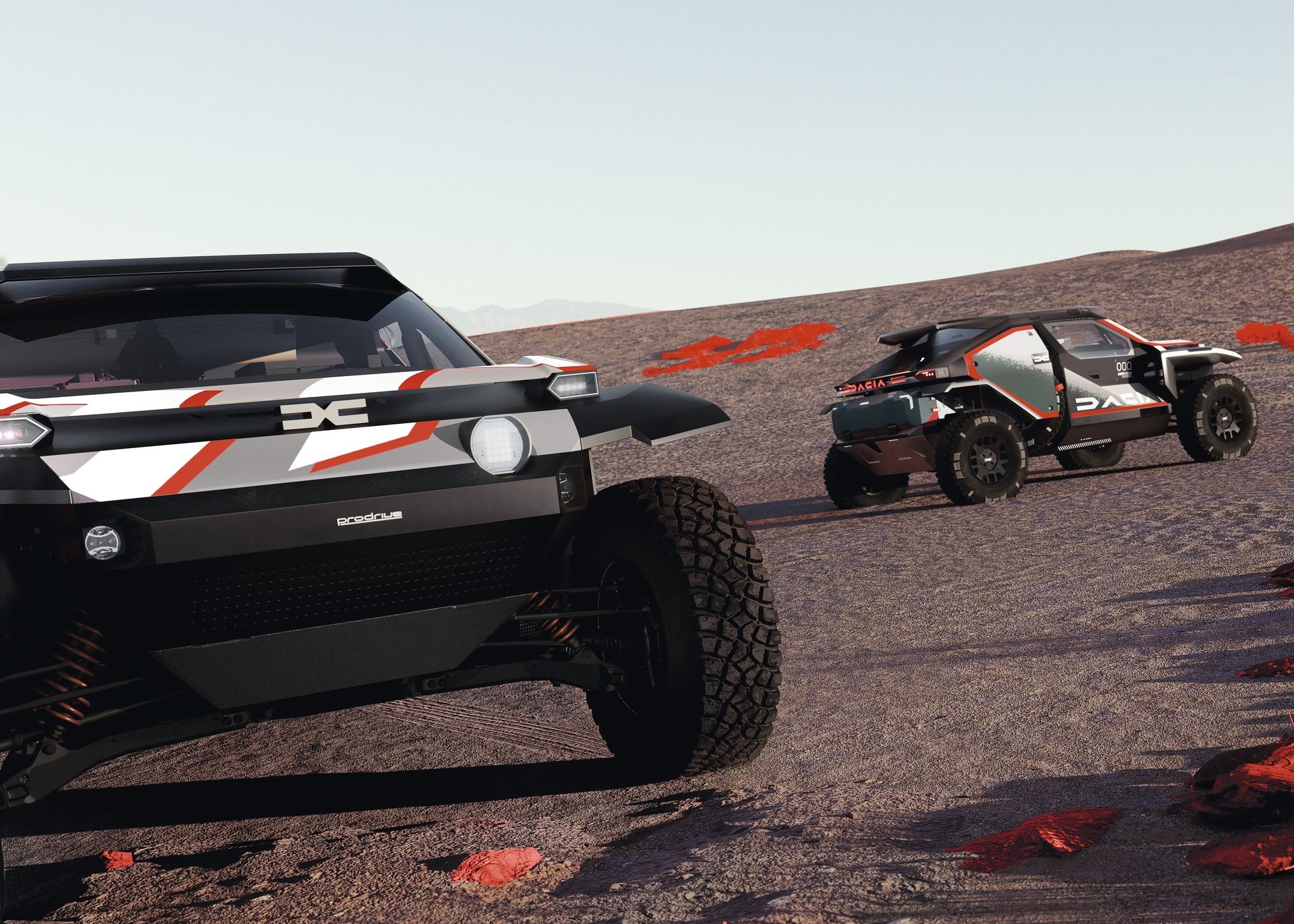
When the Sandrider was unveiled at the 2024 Geneva Motor Show, its visual similarities to the Manifesto were obvious, but under the skin, it was a completely different beast.
Dave and Driver Input
While the Manifesto was Dacia’s in-house project, the Sandrider was created in collaboration with Renault-Alpine and Prodrive. Founded by David Richards in 1984, Prodrive has a list of motorsport achievements as long as your arm, and while they’ve been pivotal in the World Rally Championship for decades, involvement in the W2RC that includes Dakar is a relatively recent thing for the UK-based company.
Prodrive had previously developed and built the ‘Hunter’ vehicle for Bahrain Raid Xtreme (BRX) to enter in Dakar. Based on a bespoke steel spaceframe, the Hunter was powered by a twin-turbo 3.5-litre Ford V6 producing a claimed 600hp (447kW). This mid-mounted engine was paired with a six-speed sequential gearbox, with fully independent suspension providing 400mm of travel.
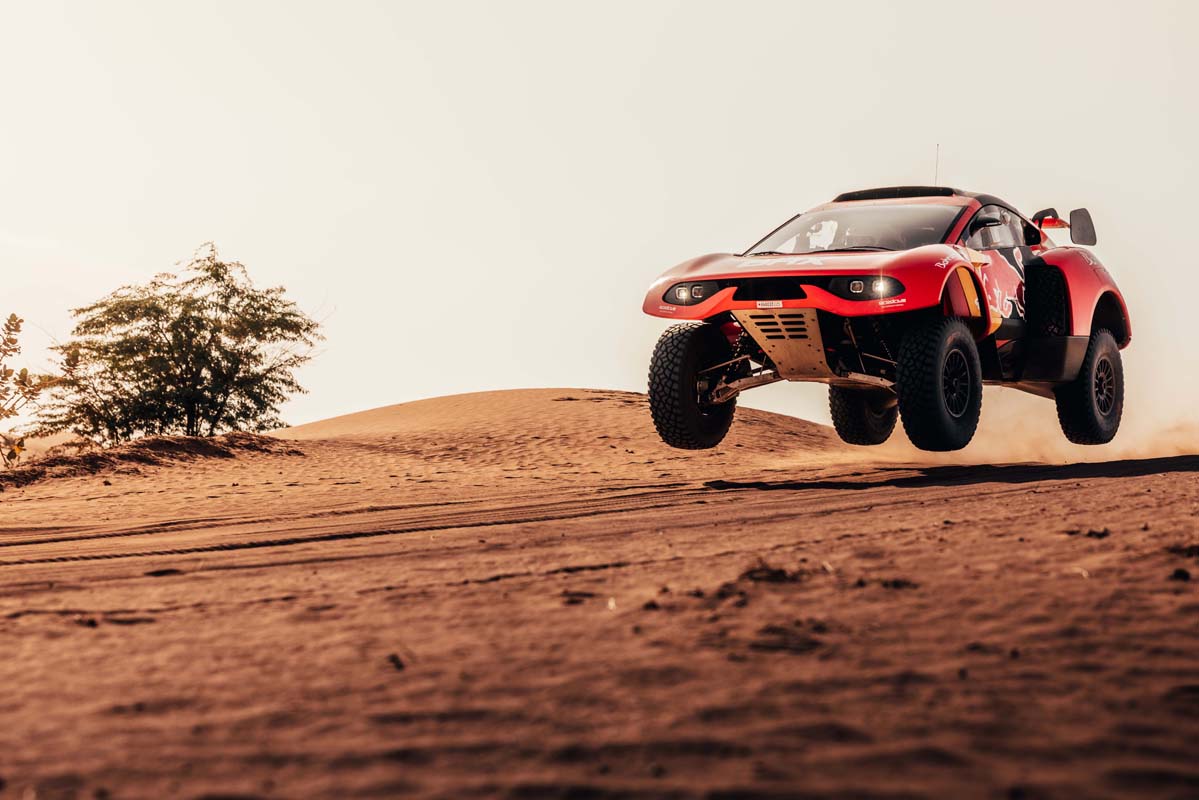
BRX was able to attract high quality driving talent, including Sebastien Loeb, Orlando Terranova, Nani Roma and Nasser Al-Attiyah, but the results – at least at Dakar - didn’t come. In their 2021 Dakar debut, the BRX squad’s best placing was fifth. A year later, Loeb finished second, then runner-up again in 2023. After Loeb finished third in 2024, the BRX project was wound up, but some of the Hunter’s DNA found its way into the Sandrider, as did most of BRX’s drivers.
The initial squad included Loeb, five-time Dakar winner Al-Attiyah, and Cristina Gutierrez. The ensure the Sandrider succeeded where the Hunter had failed, Dacia and their partners sought input from these driver/navigator pairings before they even started the project.
Factory-ish Power
As with the BRX Hunter, the Dacia Sandrider was largely built by Prodrive, but the two vehicles were very different. Changes started with the powerplant. In place of the Hunter’s 3.5-litre twin-turbo Ford V6, the Sandrider used a 3.0-litre Nissan V6 based on the VR30DDTT engine that’s in the Z sports coupe.
Tuned to deliver 400hp (298kW) in factory form, the V6 actually had to be detuned to 360hp (265kW) to meet regulations for the T1+ class that the Sandrider competes in. As such, most of the engine’s internals didn’t need to be replaced or strengthened.
Developed by Alpine Racing specifically for Rally Raid events like Dakar, the Nissan engine gained all the performance tuning you’d expect, along with a bespoke ECU, dry sump system, new exhaust manifold and new turbos.
A notable change, made to withstand the rigours of competition, was replacing all the pulleys and belts for the ancillaries with electrical power. This apparently reduces the likelihood of failures caused by the extreme conditions prevalent in Rally Raid.
The engine drives all four wheels via a sequentially operated six-speed transmission that was provided by French company, Sadev. Like the engine, this incorporated componentry designed more with durability in mind than performance. And instead of the paddle shifters you might expect, changing was via an oversized shifter offset into the centre console.
To optimise weight distribution, the powerplant was positioned almost alongside the driver and navigator in the cabin, while a massive 560-litre fuel tank was mounted directly behind the cabin.
Strong, Light and Durable
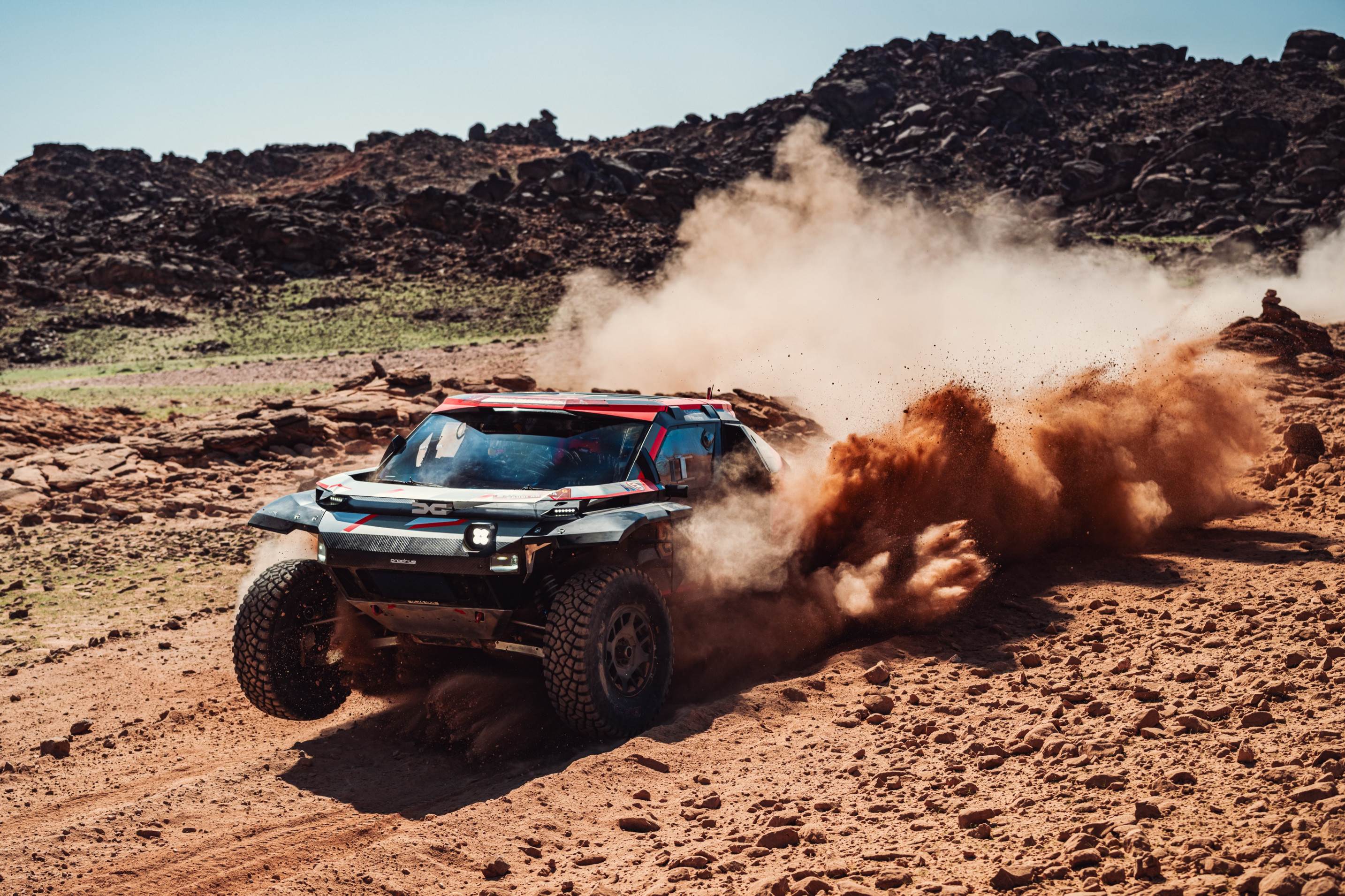
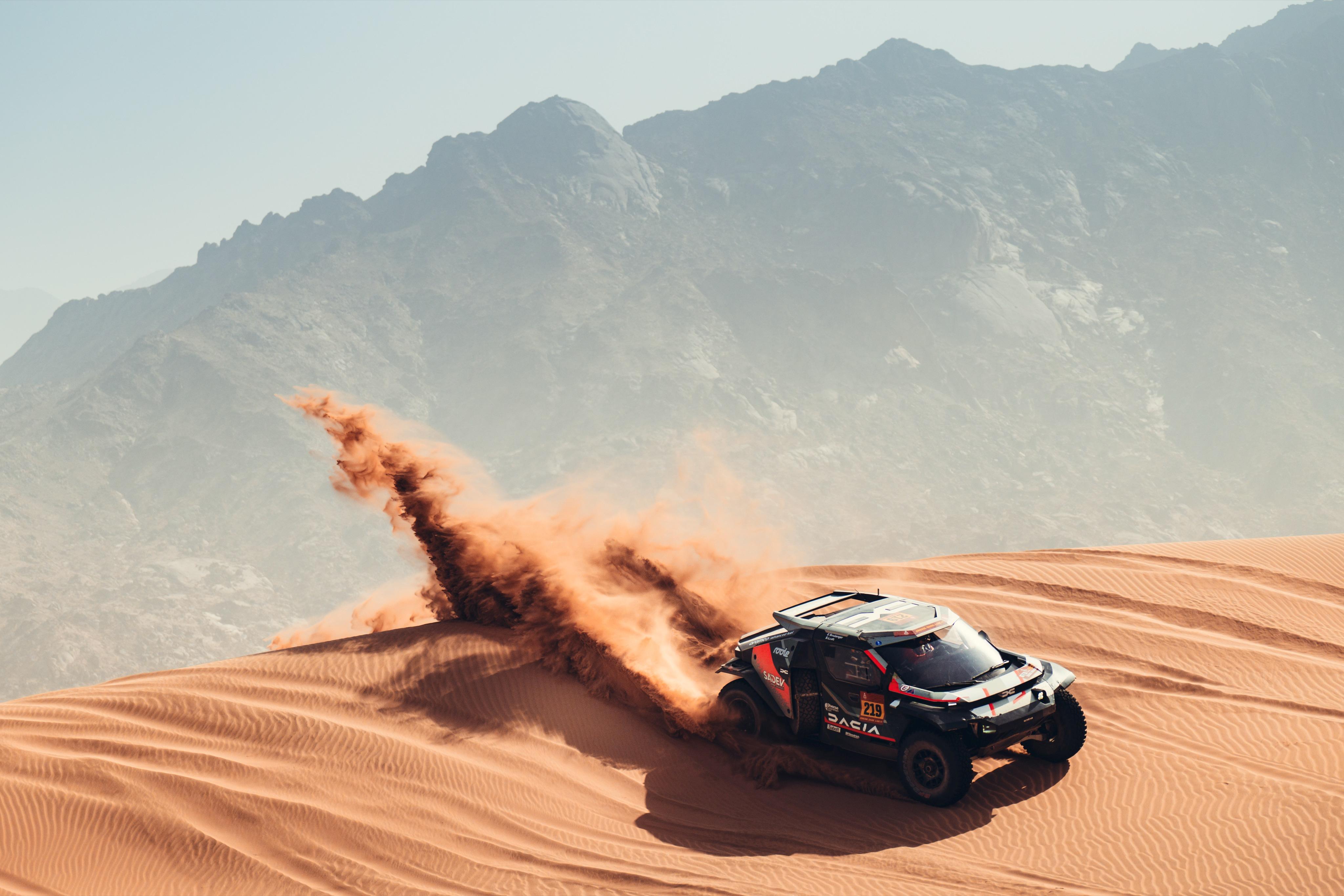
The steel spaceframe chassis for the Sandrider incorporated a roll cage, but all the body panels attached to it were in carbon fibre to reduce weight. A fully-independent suspension system used a double wishbone set-up with as few ‘handed’ components as possible, meaning a damaged part on one corner could be replaced with one from the opposite corner, minimising the amount of spares the team needed to carry from stage to stage on the Dakar, and to ship to each W2RC round.
Dual remote reservoir Reiger shock absorbers were fitted at each corner, with travel listed at 350mm. Reinforced to handle the pounding that Rally Raid delivers, not only in dune jumps, but also lower speed rough and rocky trails, these shocks were also individually cooled. As Dakar’s stages run for hours, with untimed liaison stages before and after, this cooling avoids the suspension fluid overheating and losing its effectiveness.
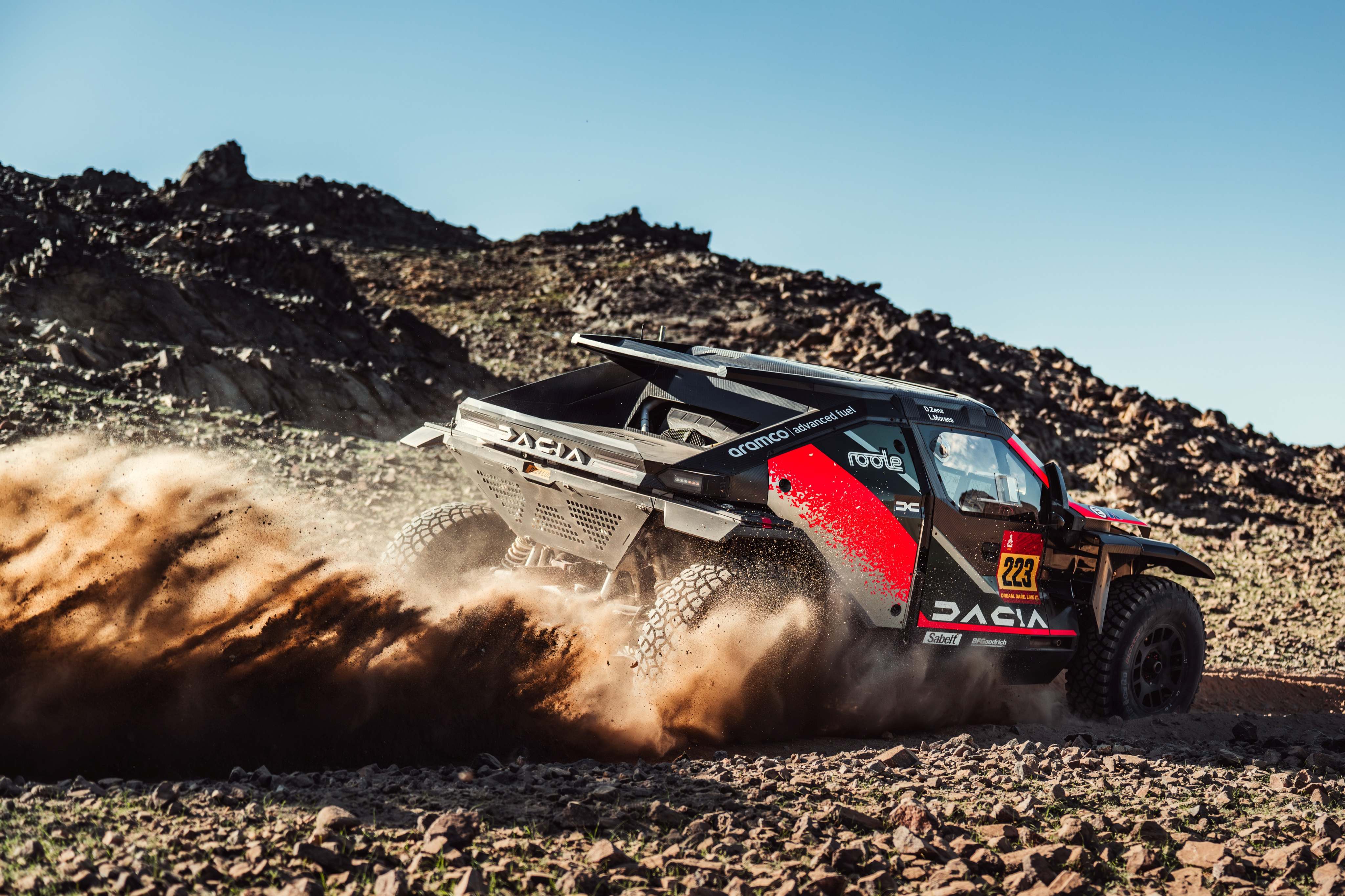
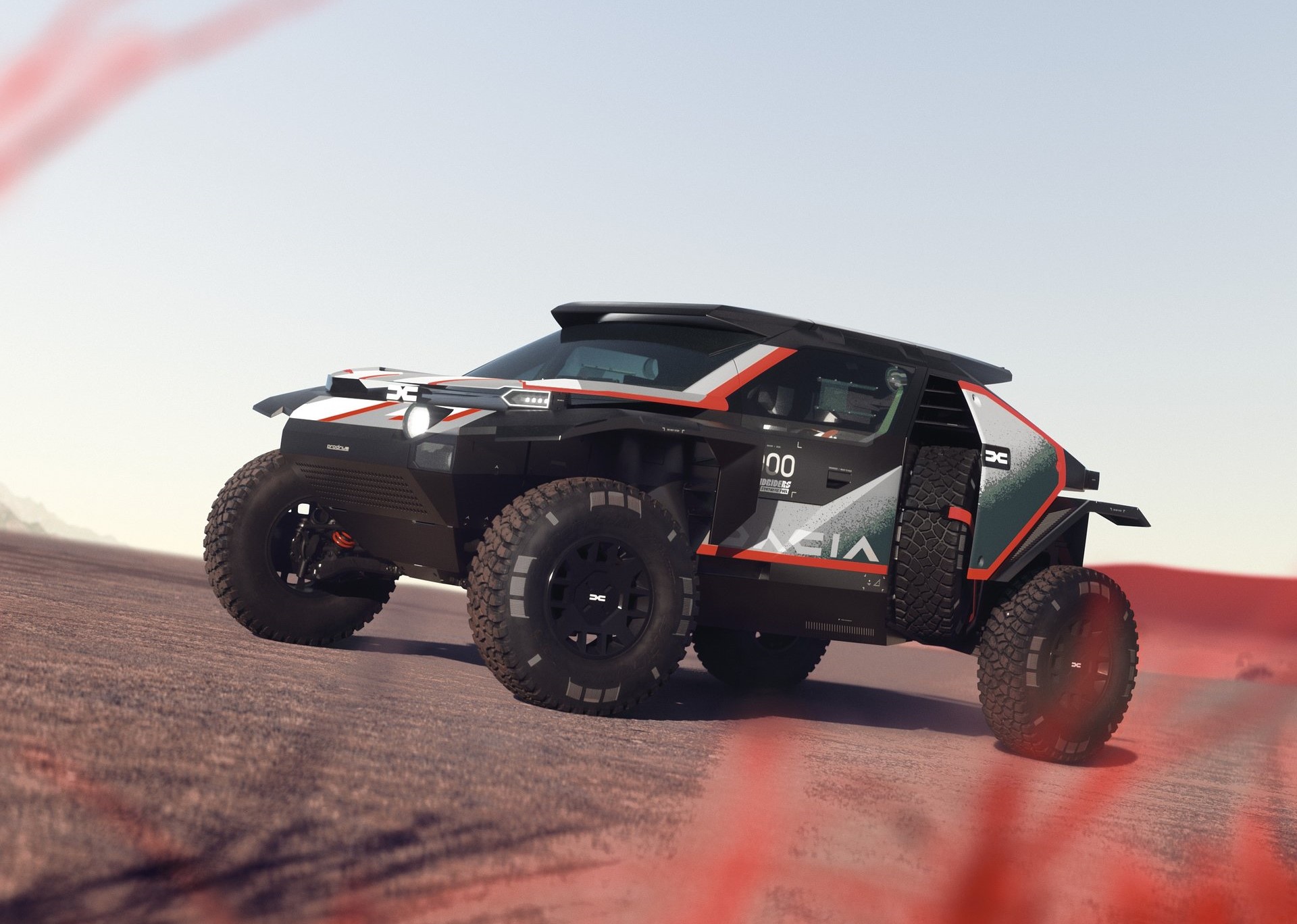
Wheels were 17-inch beadlock alloys fitted with 37-inch BF Goodrich tyres specifically developed for Rally Raid. As punctures are inevitable on the Dakar, two spares were always carried, but sometimes even this wasn’t enough. Mounted behind the cabin for easy access, these spares were deliberately exposed, as they can withstand impacts better than a body panel covering them would. Deleting unnecessary panels like this was part of a lightweighting mantra that apparently made the Sandrider 15kg lighter than other vehicles in the T1+ category, while still meeting minimum weight requirements.
An integral jacking system allows for fast changes during competition (another benefit of having easy-access spare wheels), using tools that all driver/navigator pairings carry with them. The door sills house power tools, with a magnetic panel outside allowing nuts and bolts to be held so they don’t get lost in sand when tyre changes or repairs are being done.
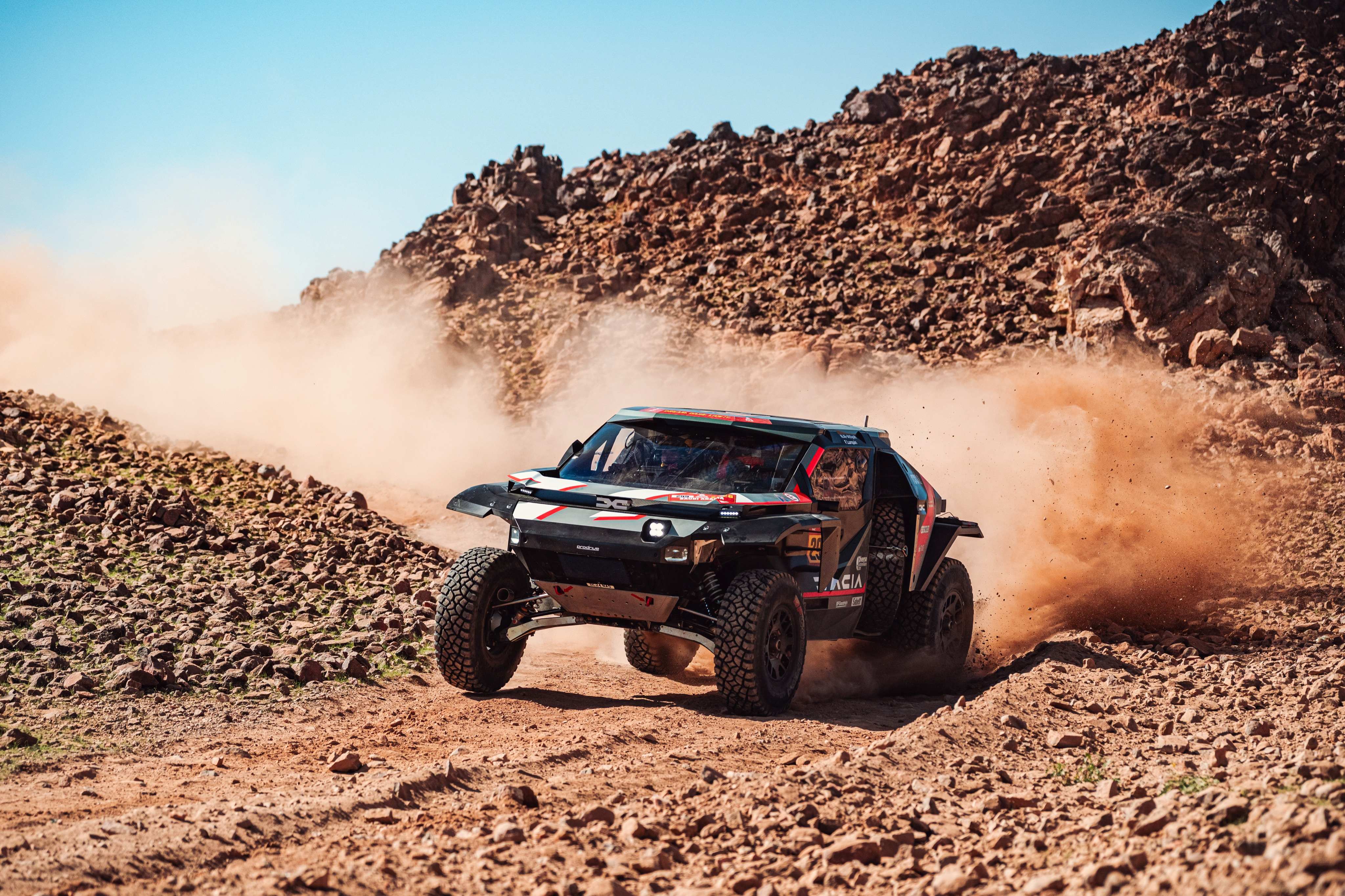
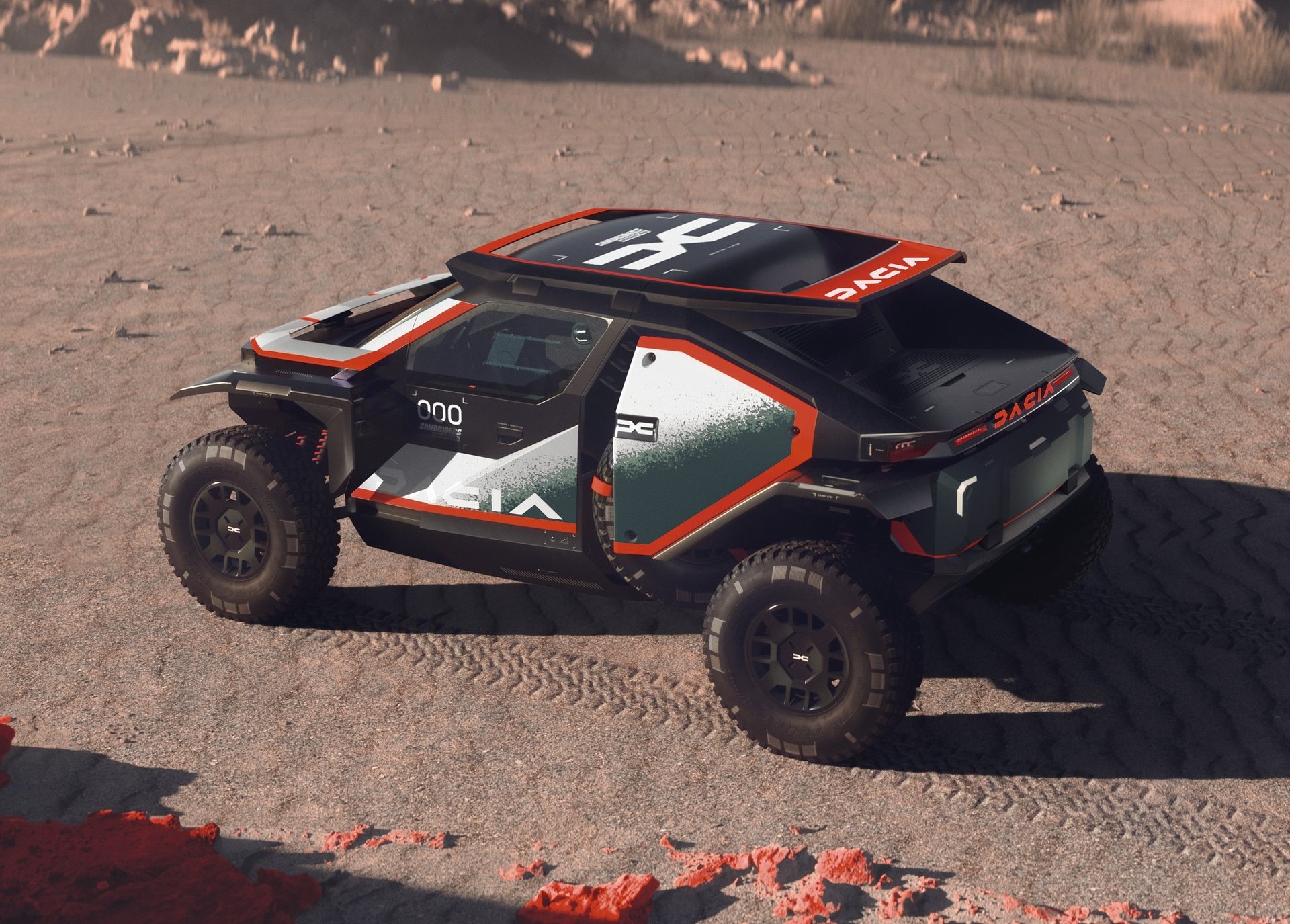
Some elements on the carbon fibre body were recognisable from the Manifesto concept, including the offset single headlight, flat rear deck and flat roof with projecting front and rear spoilers. The carbon panels themselves had an infrared treatment to reduce heat transfer – from outside and the engine bay – into the cabin. This removed the need to paint panels white in order to reflect sunlight and minimise heat transfer.
A Sandrider-specific addition, and one resulting directly from the aforementioned driver input, was the “biplane” bonnet. This split treatment of the bonnet’s leading edge improved airflow while increasing forward visibility, as drivers could see through the gap between the two planes – a crucial consideration when traversing rough trails or cresting dunes.
Front and rear overhangs were minimal, as were body elements that could get snagged on rocks, trees and bushes. Ground clearance isn’t listed, but the Sandrider’s external dimensions of 4,140mm x 2,290mm x 1,180mm (LxWxH) are substantial, while the 3,000mm wheelbase is comparable to a Land Rover Defender 130 or LandCruiser 300 Series.
Purpose-Built Cabin
When the Sandrider concept was unveiled in 2024, it showed a funky two-spoke steering wheel and two giant displays ahead of the navigator. On the concept, these were part of a modular system that transferred to the racer, allowing different screens for different data displays to be slotted in. The transmission tunnel looked to be covered in the ‘Starkle’ recycled material seen on the Manifesto, while some other elements appeared to be more about style than function.
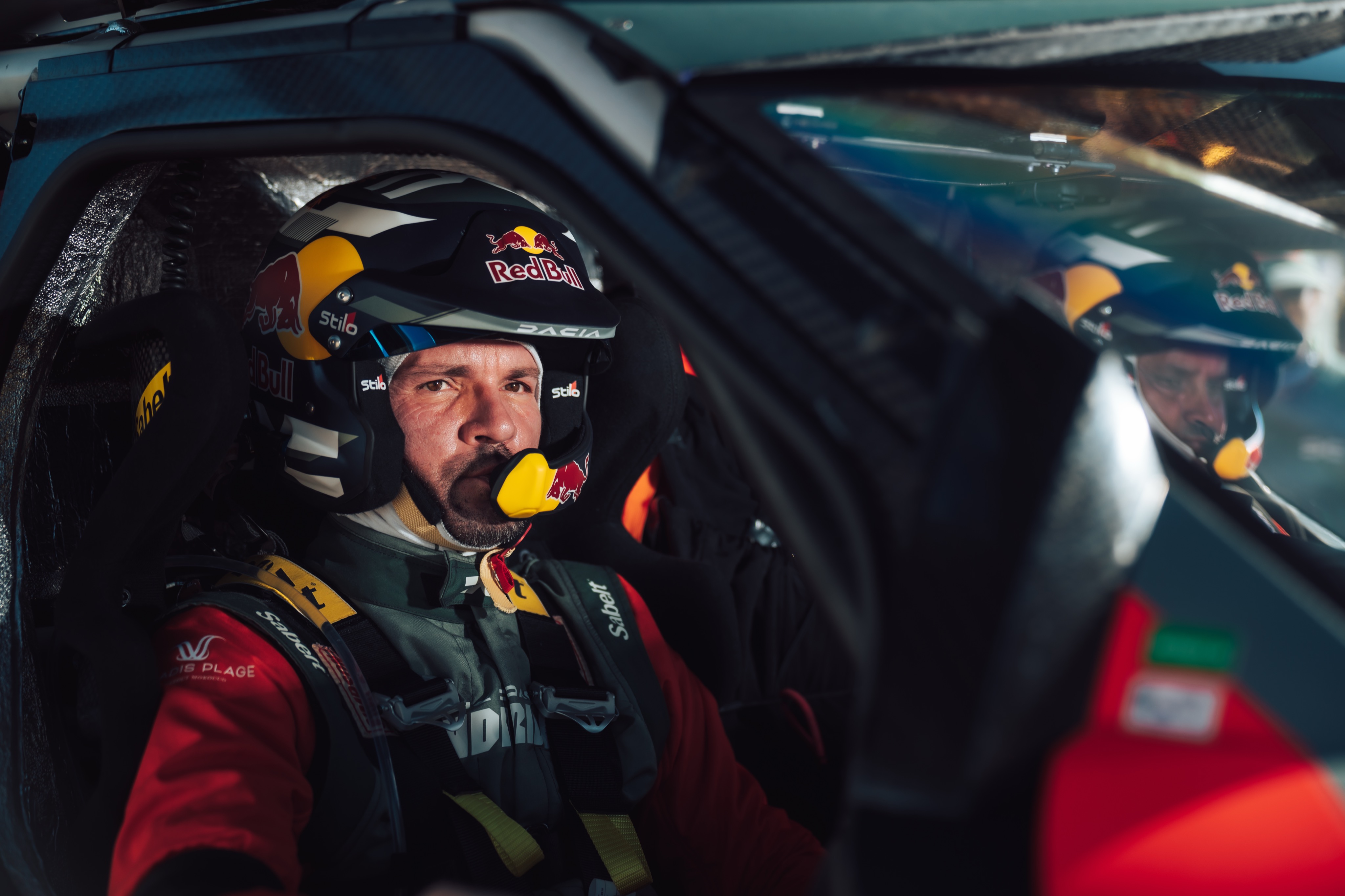
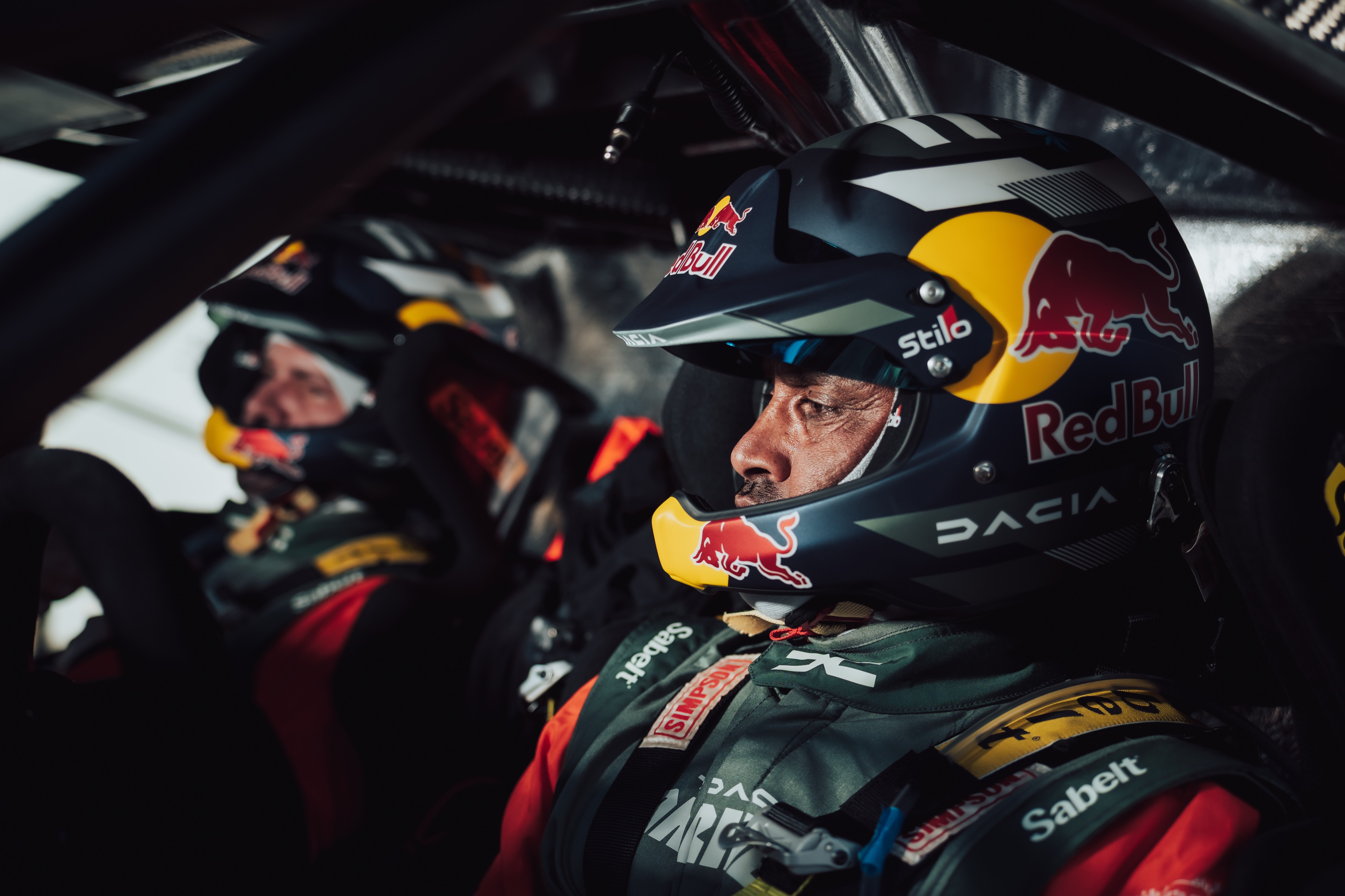
For the racing Sandrider, W2RC rules make some cabin fittings and their position mandatory, so the placement of the fire extinguisher, for example, was different on the racer compared to the concept. But within this framework, a degree of personalisation is allowed. That’s where the Dacia team were able to take advantage of the Sandrider’s modular dash set-up, allowing subtle differences in the cabin layout to suit driver/navigator preference. The dash was also finished in anti-reflective paint to reduce glare from the bright desert sun.
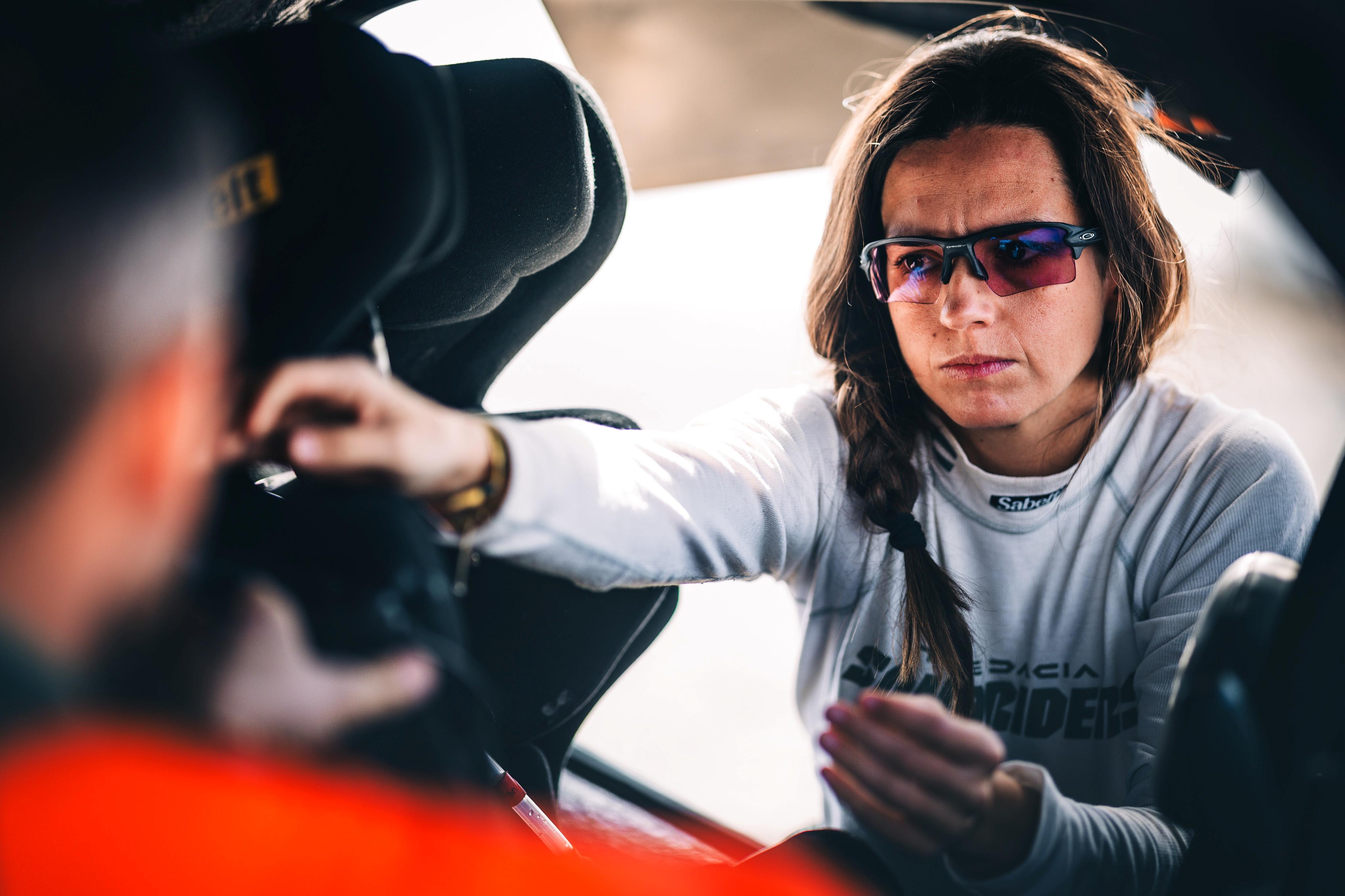
As with the exterior, if something wasn’t necessary for the interior, it wasn’t included. While visible Dynamat-style lining made the cabin look unfinished, everything in there had a function, even if it wasn’t immediately obvious. For example, the Sabelt race seats were trimmed in a special fabric that regulates temperature and wicks away sweat.
For the 2026 Dakar, Prodrive developed a seat mounting system that offered a degree of travel, comparable to progressive shock absorbers. This allowed bigger impacts to be absorbed, with smaller bumps reduced to prevent occupants bouncing around the cabin. This system proved to be so successful that it’ll be compulsory for all Rally Raid competition from 2027.
Solid Debut, Stronger Return
On the Sandrider’s competition debut at the 2024 Rallye du Maroc, Al-Attiyah won the five-day event, with Loeb second, setting hopes high for victory at the 2025 Dakar. The team came away disappointed, though, with Al-Attiyah fourth and Gutierrez 40th, while Loeb was controversially disqualified on safety grounds after a huge crash on Stage 3 bent his Sandrider’s roll cage.
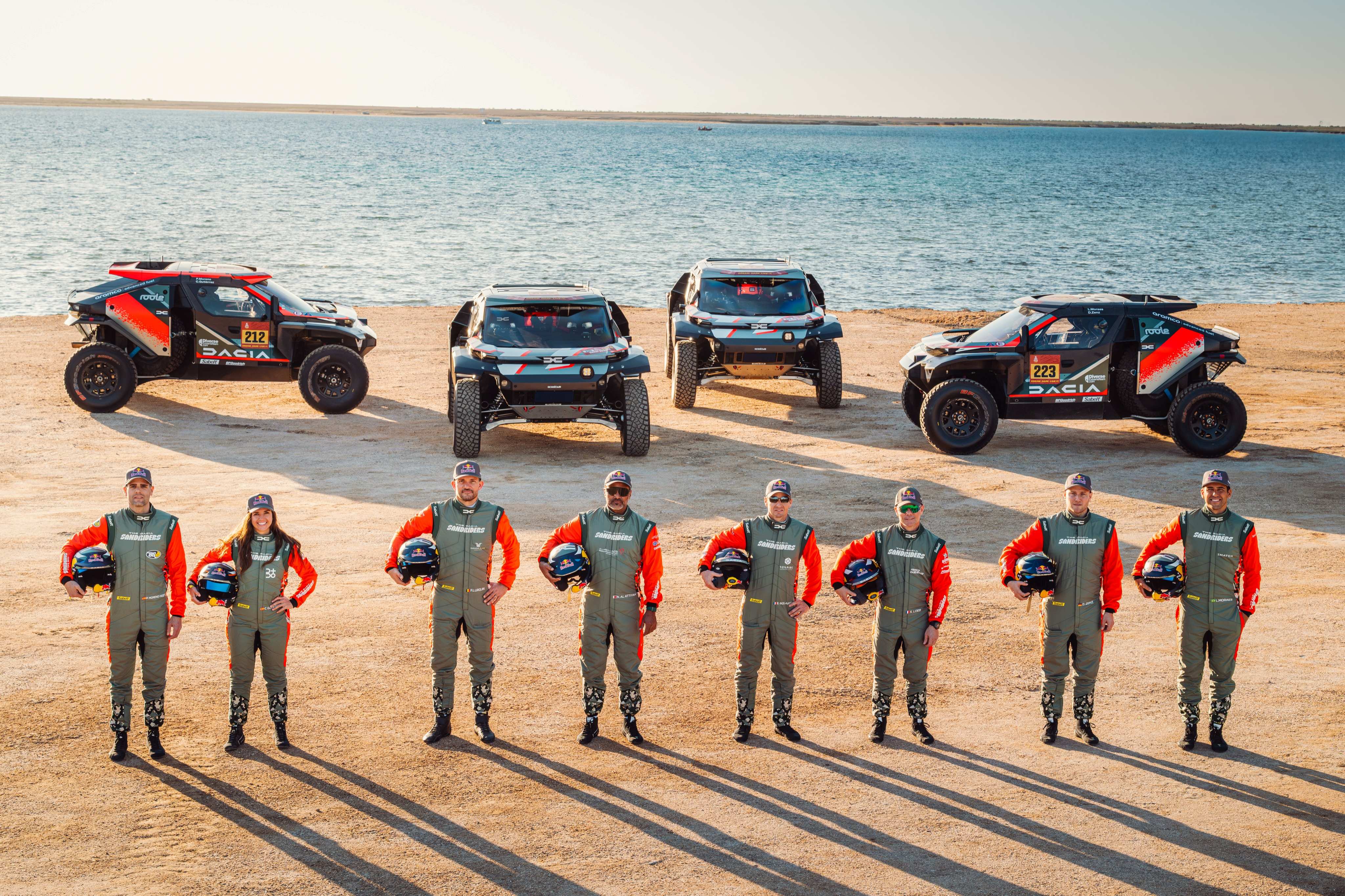
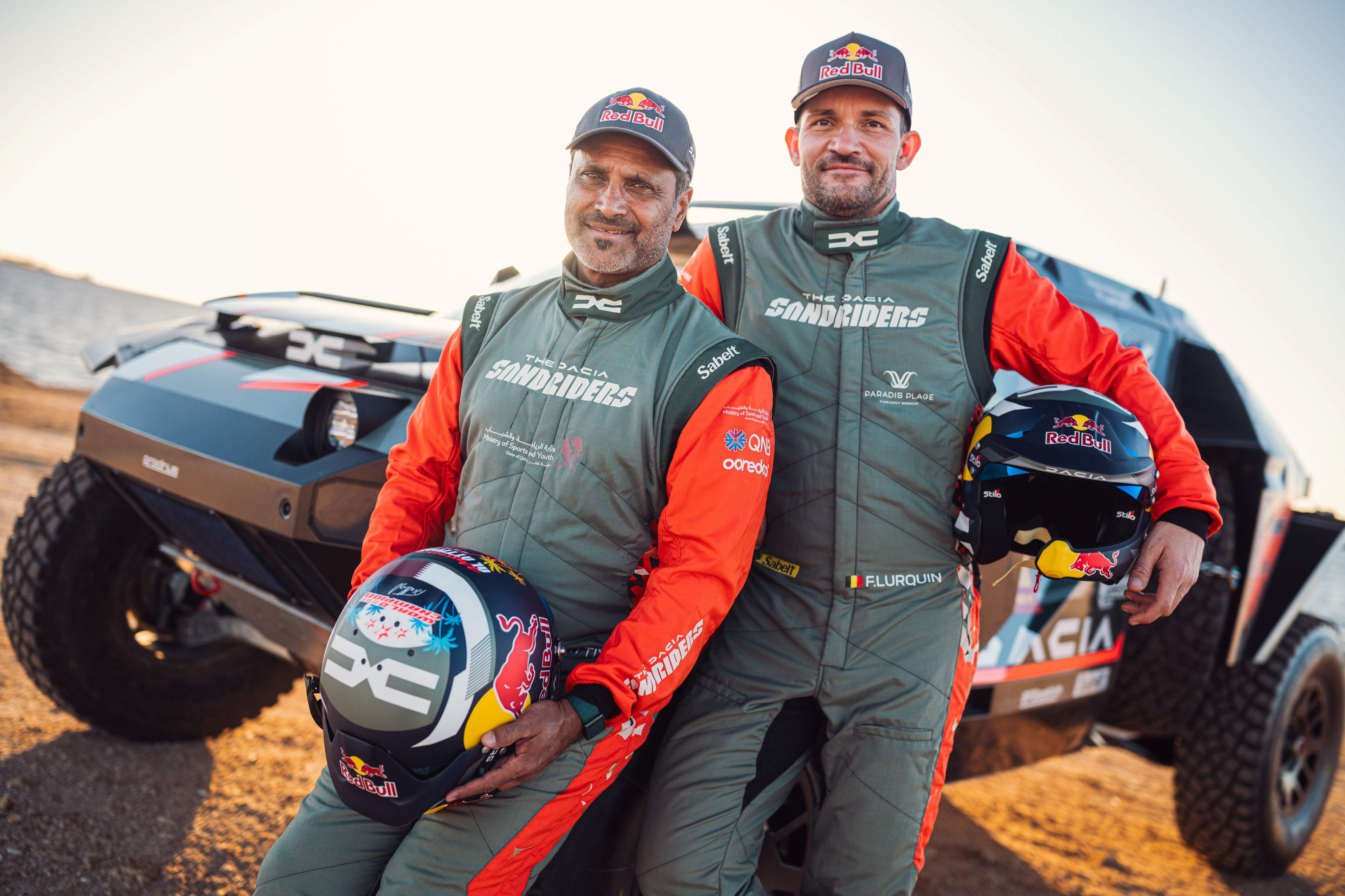
Returning to Dakar in 2026, and adding Lucas Moraes to the driving roster, the Sandriders proved consistency and durability were better assets than outright speed. Al-Attiyah won only two of the thirteen stages, but never finished a day lower than 19th. The Qatari held the overall lead, with one exception, from Stage 6 to the finish at Stage 13.
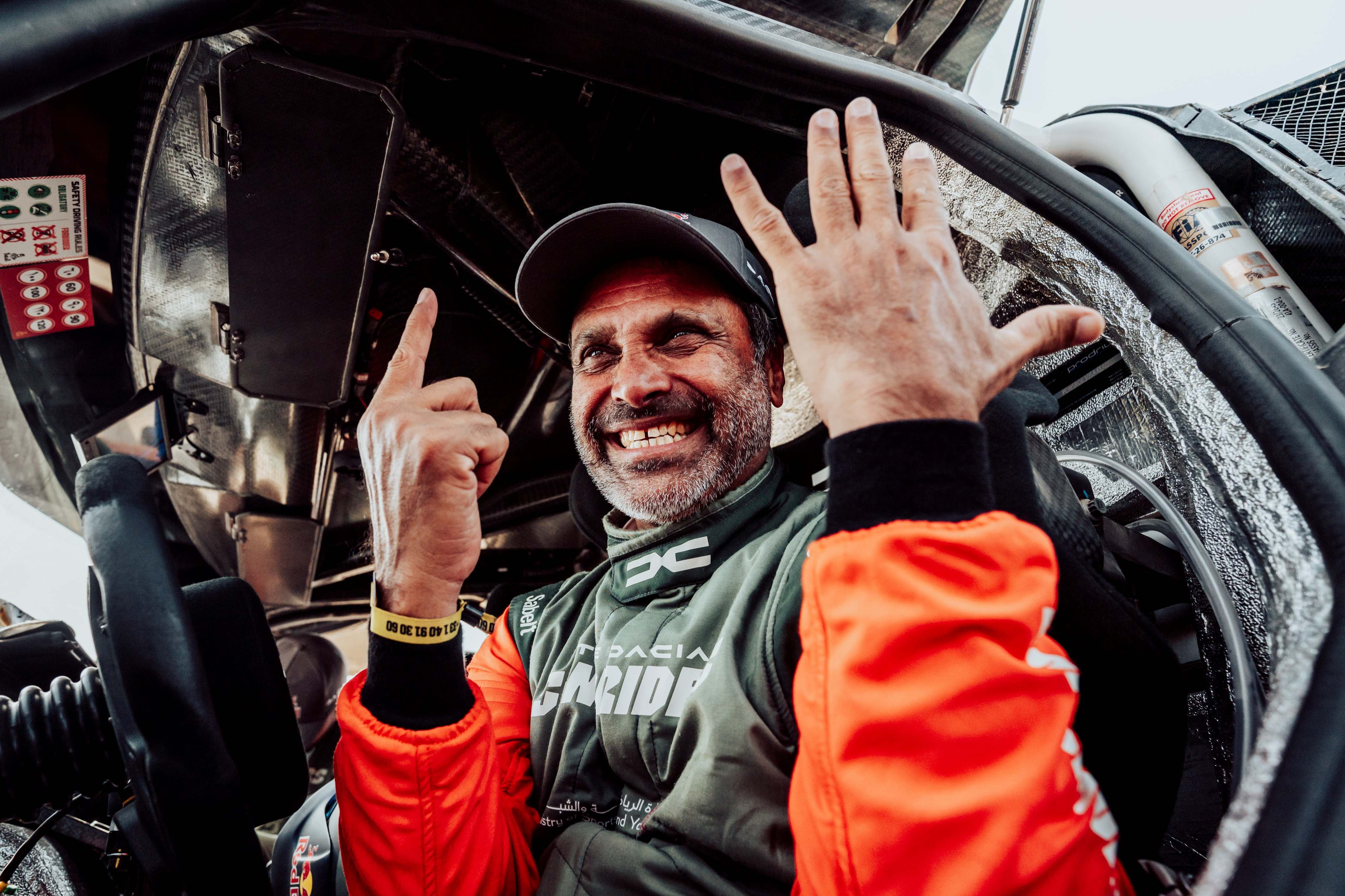
"We've worked very hard since last year,” Al-Attiyah explained. “We are so happy to win. I think we made the difference on the second day of the first marathon stage by building up a twelve-minute lead. [Stage 12] was also important. That's when we knew we'd won the race.”
Loeb finished fourth overall, Moraes seventh and Gutierrez eleventh. More impressive for Dacia was the fact they beat entries from automotive heavyweights, Ford and Toyota.
Now with six Dakar titles to his name, Al-Attiyah is setting his sights on Stephane Peterhansel’s all-time record of eight Dakar wins. Whether he’ll equal or break that record in a Sandrider remains to be seen!


